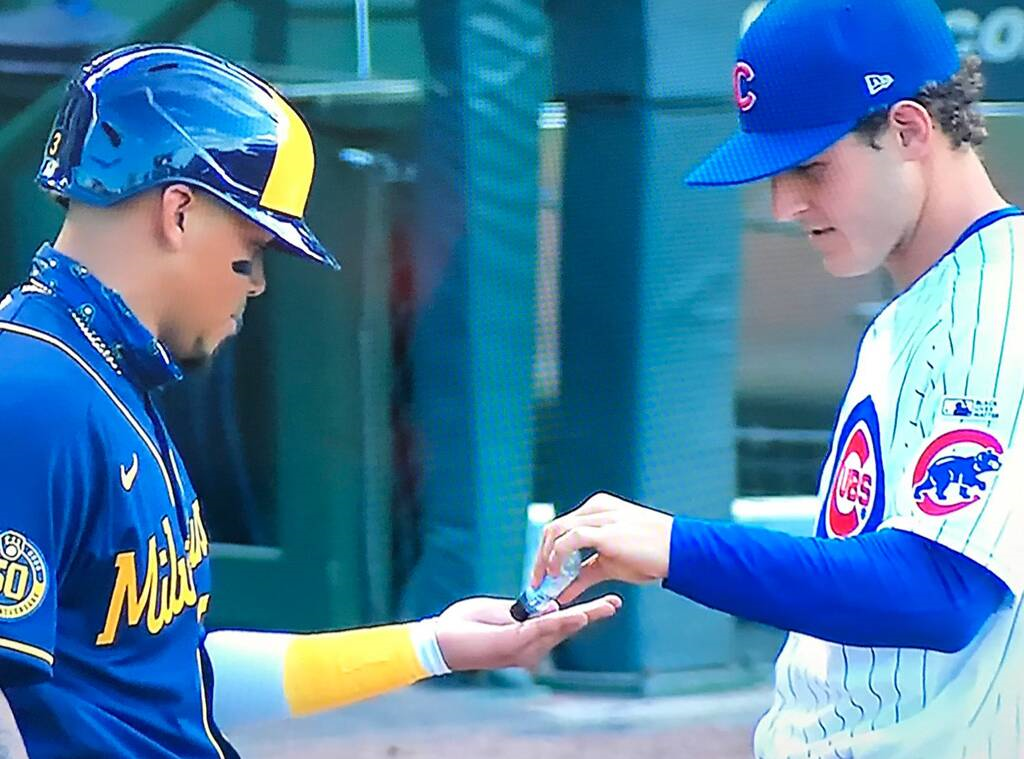
Instagram/MLB
When I started this little blog, I figured I’d spend a lot of my time writing about sports.
Sports has always been a passion for me, as much as music has been.
It’s been that way since I was ten years old, when I moved to a small town in central Massachusetts, and landed in what seemed like heaven.
It was the summer of 1967, and the “Impossible Dream” Red Sox.
Perennial last-place finishers, they somehow won the American League, and came within one game of upsetting the St. Louis Cardinals in the World Series.
I was borne, magically, to baseball, and to a great bunch of friends.
We’d sit in astonishment in our classes, as the World Series games were piped into the school P.A. system.
The final bell of the day would ring, and we’d spill out of the classrooms to run home and watch the games on TV with our buddies. (Imagine that, kiddos…. They played the World Series games in the afternoon.)
When the games were over, we bounced happily outdoors, to play our own ballgames in our improvised backyard fields, mimicking the stances of our favorite Red Sox players – the high, poised bat of Carl Yastrzemski, or the menacing tilt of Reggie Smith.
I learned to recite the litany of heartaches that ensued after that, as the Red Sox went 86 years without winning a World Series.
Years later, I indoctrinated my ten-year-old daughters in the quest.
They were there with me, watching as the Sox finally broke the spell and won the World Series in 2004.
[And I will swear to you upon my well-worn copy of Shoeless Joe, that my daughter Savannah is responsible for the Red Sox breaking that spell. She found a lucky 1918 penny on the morning that the Red Sox trailed the Yankees, three games to none – they never lost after that, beating the Yanks four straight, and then beating the Cardinals four straight.]
After the final game, I gathered with some of my friends at the church in the center of town.
We snuck in, and rang the church bells, ringing in the good news for the citizens of Bolton, Mass.
Then we went back out and celebrated with beer and champagne in the front yard of the church.
It’s not the sort of night you forget.
/cdn.vox-cdn.com/uploads/chorus_image/image/42807106/G4.0.0.jpg)
Getty Images
All of which is to say, without any false modesty, you just can’t find anybody who cares about sports more than I do.
You can certainly find people who know more about sports than I do – but it’s tough finding anybody who cares more.
It’s still my morning ritual to check the scores from last night’s games – baseball, basketball, hockey… even football.
Of course, I hadn’t been doing much of that lately.
Until last week – when baseball came back.
Here’s the odd thing. I’m not overjoyed.
I watch the games (or more likely, listen to them on radio) – but they feel like spring training games.
And there’s an odd sense of dread, that they’re going to end sometime soon.
Don’t get me wrong – it’s been great, seeing Jackie Bradley race to the fence to make another graceful catch, or seeing crazy Joe Kelly chirp at the Astros players, after almost hitting Alex Bregman, because the Astros cheated in the World Series.
But it’s all just a little surreal.
It’s watching a batter circle the bases after hitting a homer, waving his fist to the empty seats.
It’s the piped-in “crowd noise” whenever something good happens for the home team.
It’s the eerie cardboard cutout fans or the even eerier digitized fans.
It’s more than that, though.
It’s seeing the Toronto Blue Jays become a team without a home, as Canada refuses to let them bring their American friends across the border to play. (It’s understandable. Our Canadian neighbors have done a much better job than us at controlling the virus, and they should do what they have to do to keep us out.)
Meanwhile, the Jays travel like nomads to New York, Baltimore, Atlanta, and elsewhere, acting as the “home team” in half of their games. (Buffalo finally agreed to adopt them, but they’ve got to upgrade the lights on their minor league stadium to major league quality. They hope to play there by sometime in August – if the league lasts that long.)
It’s seeing the Florida Marlins and Philadelphia Phillies sit at home (or in their hotel) while their games are cancelled, after 38 members of the Marlins (as of Sunday night) tested positive for Covid.
It’s seeing some of the game’s biggest names – Dodgers’ lefty David Price, Giants’ catcher Buster Posey, Brewers’ centerfielder Lorenzo Cain, Mets’ slugger Yoenis Cespedes – sit out because they don’t want to catch the virus and bring it back home to their families.
The sport is trying so hard to bring it back… I just don’t know if it’s worth it.
As proof of my fanaticism, I offer this: I actually listen to sports talk radio.
No, I’m not proud of it.
I think I must have a need to lower my IQ, because that happens every time I tune in.
A lot of the sports talkers have very little patience for players who opt out from playing.
People are very quick to question David Price’s manhood, for example. (Interestingly, this criticism comes from guys who pitch constant ads for treatment for ED…)
These critics act like we’re owed this commitment from these athletes, like it’s our right to have them sacrifice themselves, so that we can forget our troubles for a few hours, by watching them play a game.
A friend of mine was criticizing David Price for opting out. “Why can’t he play?” he asked.
“You got all these grocery store workers bagging your groceries, for $12/hour – why can’t this millionaire play a game?!”
(We can talk about grocery store workers getting just $12/hour… but that’s a topic for another day…)
“Maybe David Price just doesn’t want to get sick,” I offered.
“What?! He really thinks he’s gonna get sick???”
Turns out, the odds are pretty good.
Aside from the 18 Florida Marlins players – along with 20 members of their traveling party – there are cases popping up across the league.
Major League Baseball had reported 77 cases league-wide as of Saturday night. (That is since players reported to “summer camp” in preparation for the season. It’s important to note that 44 of the players have reported to their teams since then.)
And while sports talkers are quick to point out that these athletes are young and strong – that doesn’t make them immune to the virus.
You don’t have to look much further than my Red Sox for an example.
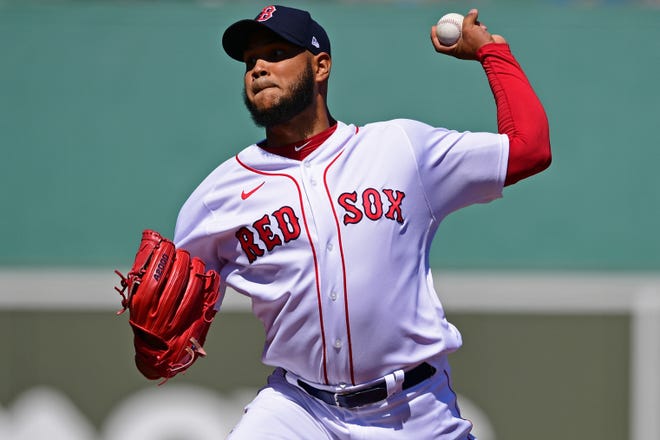
Their best pitcher, the promising young Eduardo Rodriguez, came down with Covid (along with two other pitchers on the team, and a minor league hitter).
Eduardo did his quarantine, and then rejoined the team two weeks ago. As young and strong as he is, the 27-year-old told the press, “It was awful… I felt like I was 100 years old.”
A week after he came back, he was sidelined.
The virus had left him with a case of myocarditis (an inflammation in and around the heart).
He’s out for the season.
David Dermer, USA Today Sports
Baseball has unwillingly become the guinea pig for all of the sports.
They were the first to come back, and they handled it clumsily.
The players and the owners squabbled openly about how to divvy up the money, given that A) they were shortening the season from 162 games to 60, and B) they weren’t having paying spectators.
They finally came to an agreement, days before they had to cancel the season entirely.
And now it’s kind of painful, watching them figure out protocol as they go along, cancelling series because one team or another has had new test cases.
For some reason, all the sports talkers agree that the other sports will do so much better than baseball.
Basketball is playing in a self-enclosed “bubble” in Orlando, with no infiltration from the outside world, supposedly.
The NFL, the conventional wisdom goes, always figures these things out, and can just impose its will on the players, and even on the virus.
The NHL is doing a similar thing to the NBA, in two separate bubbles in Toronto and Edmonton. Besides, nothing stops a hockey player.
Critics of baseball are quick to point to the lax Covid protocol, and to blame the players for the outbreak, somehow. (There were rumors that the Marlins came down with after the younger players had gone out to a nightclub in Atlanta. That story was proven to be unfounded.)
It’s reminiscent of red state governors blaming out-of-staters for their high case numbers.
The reality is, Covid spreads through sports, just as it spreads through society.
You’ve got players living their lives, going home to their families, doing what normal people do.
Some of them are living in hotspots like Florida, Texas, Georgia, and California.
Then they get on planes (in the case of baseball and football) and fly around the country, with as many as 100 team members and staff on the plane.
Under what rational scenario would they not be spreading the virus?
Even the NBA has had issues already.
Players have been reportedly sneaking out of “the bubble” (located in the Covid capital of Florida) and going to nightclubs and strip joints. (Again, these are a lot of young, athletic kids, who think they’re impervious.)
The NFL has the largest rosters, and the highest number of coaches and staff members of all the sports.
Already, 43 players have opted out of the season (including eight Patriots, like standout linebacker Dont’a Hightower and safety Patrick Chung).
Several players and staff have tested positive – most ironically, the Minnesota Vikings “infection control officer,” Eric Sugarman.
And in their case, they will be opening in September – just as the flu season hits, and the “second wave” of Covid is expected to take hold, experts warn.
I have to admit, it’s fun, listening to the sports talkers pontificate about the fortunes for the season. For a minute, you can close your eyes, and forget that anything is wrong.
Who will do better: The Tampa Bay Buccaneers, with Tom Brady at quarterback, or the New England Patriots, with Cam Newton?
Why is Red Sox manager Ron Roenicke resting his regular players, when it’s just a 60-game season?
Which NBA team is best equipped to deal with the pressure of a shortened playoff structure?
But I listen to these arguments, and I have to laugh.
How quaint, I think to myself…. They talk like there’s actually going to be a season…
Washington Nationals reliever Sean Doolittle has become one of my favorite ballplayers.
He’s a bit of a rebel – he declined Donald Trump’s invitation to visit the White House after the Nats won the World Series.
Doolittle has a brother with special needs, and he was put off by Trump’s mocking of a disabled reporter. “Who would want to hang out with a guy like that?” he asked, endearing himself to me.
As baseball desperately tried to come hurtling back to the field, Sean expressed his reservations.
Without meaning to, he gave a startling and profound one-minute lecture to the nation.
“I do think it brings to mind kind of where we’re at in our response to this as a country.
Like we’re trying to bring baseball back during a pandemic that’s killed 130,000 people.
We’re way worse off as a country than we were in March when we shut this thing down.
Look at where other developed countries are in their response to this.
We haven’t done any of the things that other countries have done to bring sports back.
Sports are like the reward of a functioning society.
And we’re trying to just bring it back, even though we’ve taken none of the steps to flatten the curve, whatever you want to say.
We did flatten the curve a little bit, but we didn’t use that time to do anything productive.
We just opened back up for Memorial Day. We decided we’re done with it.
If there aren’t sports, it’s going to be because people are not wearing masks, because the response to this has been so politicized.
We need help from the general public.
If they want to watch baseball, please wear a mask, social distance, keep washing your hands. We can’t just have virus fatigue and keep thinking, ‘Well, it’s been four months, we’re over it, this has been enough time, right? We’ve waited long enough, shouldn’t sports come back now?’
No, there are things we have to do in order to bring this stuff back.
And now you want to bring fans back? Is that safe? I don’t know. I’m not a public health expert, but we should probably defer to them on some of these issues.”
Who ever said that jocks weren’t smart?
 Daddy Gibs
Like a little literary present to start the week. Gracias.
Sent from Sue’s phone
>
LikeLike